STUDIO 01 / VIDEOYouTube & video creation
Plan, shoot, edit and publish an original short video, from phone filming to storytelling, sound and responsible publishing.
A proposed Middlesbrough hub helping people facing barriers to learning and work build confidence, practical digital skills and a supported next step. Start with curiosity. Leave with something you made—and a plan to move forward.
Start in shared premises with video, branding and website projects. Provide 24 supported workshop hours per participant, a named mentor and an agreed progression plan. The wider six-studio vision grows as demand, expertise and resources are demonstrated.
These are proposed design assumptions, not funded places or achieved outcomes. Costs require quotations; delivery depends on incorporation, venue, staffing, referral arrangements and funding. Preparation and follow-up sit outside the 12-week workshop window.
Someone may have the curiosity to become a creator, designer or business owner — but no equipment, no confidence, no network and no clear first step.
Traditional courses can ask people to commit before they know whether a subject fits. Reconnect reverses that. Start with a welcoming, practical experience. Make a piece of work worth showing. Then discover the route that makes sense for that person.
"Not everyone needs another classroom. Some people need a chance to try."
The first pilot prioritises video, social media and websites using shared devices. AI and e-commerce can support those projects; a dedicated 3D printing offer follows when specialist supervision and equipment are secured.
STUDIO 01 / VIDEOPlan, shoot, edit and publish an original short video, from phone filming to storytelling, sound and responsible publishing.
STUDIO 02 / SOCIALCreate a story around a product or service. Learn content planning, design, audience research and clear, ethical marketing.
STUDIO 03 / WEBBuild a simple landing page or portfolio. Explore layouts, accessible design, domains, user experience and online presence.
EXPANSION / MAKERSketch a product, build a model, print a prototype and learn the basics of iteration, materials and small-scale production.
SUPPORTING TOOLS / AIExperiment with useful AI tools for ideas, research, design and small business workflows — with human review and safeguards.
ONWARD ROUTE / BUSINESSExplore product photography, online selling, price-setting, basic bookkeeping, customer service and how to test demand.
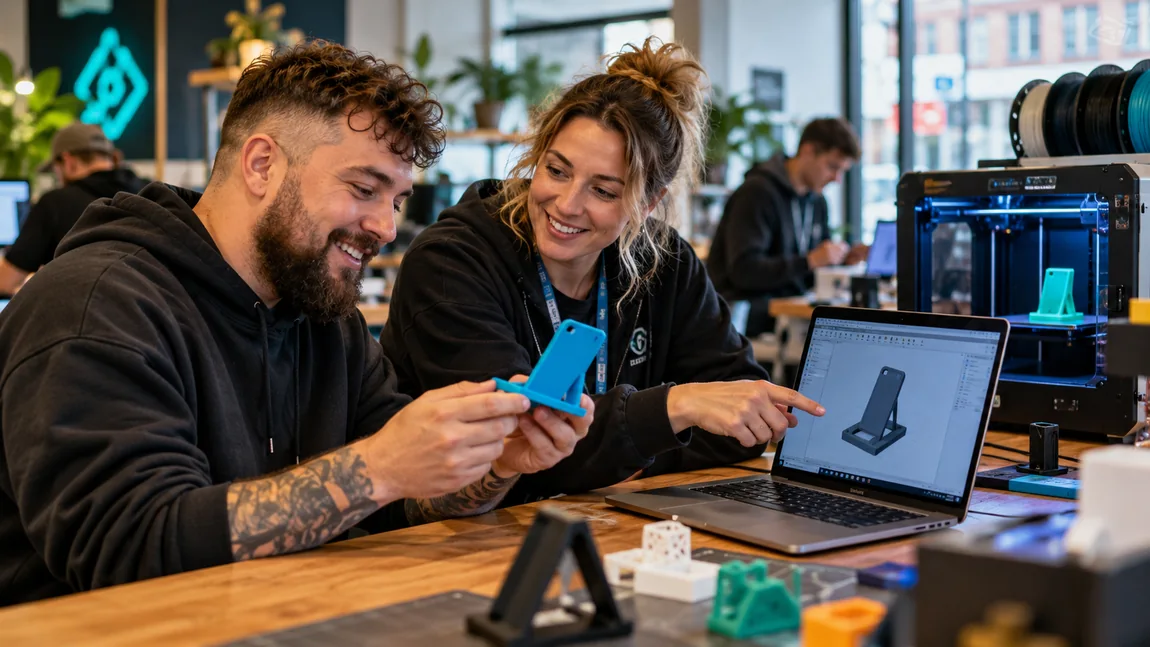
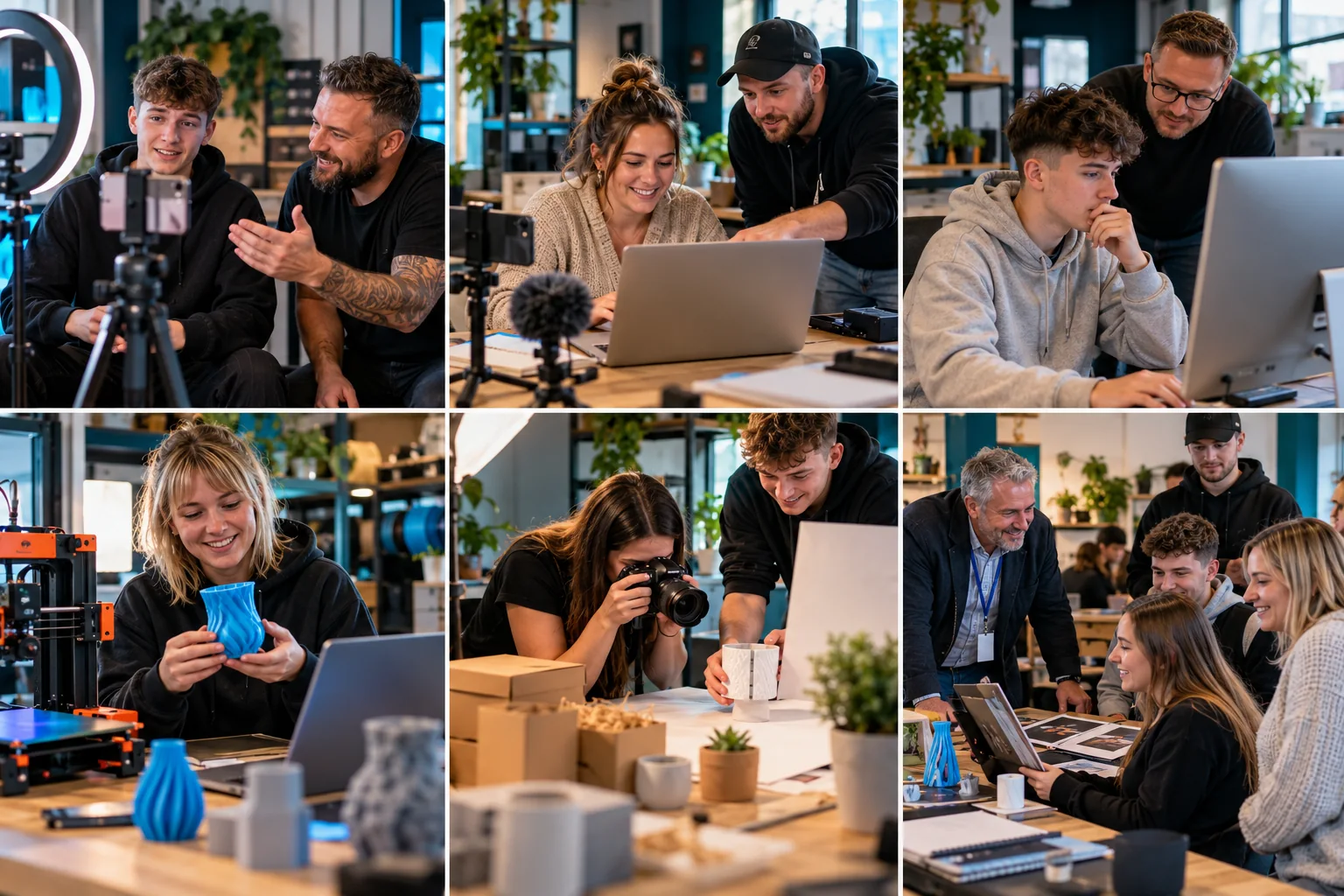
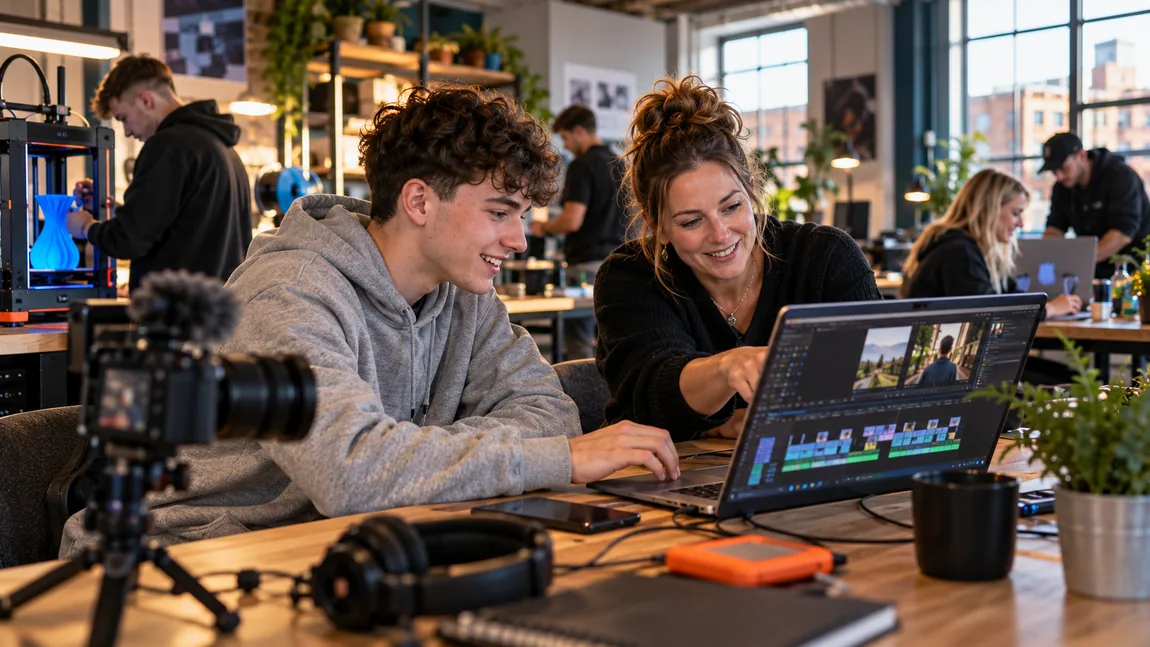
Illustrative AI-generated imagery showing proposed learning activities, not photographs of an operating NCE programme. Studio content and access arrangements are subject to pilot design.
Proposed first cohort: Middlesbrough adults aged 18+ who are out of work or disengaged from learning and want a supported way to explore digital creativity. No polished CV, personal laptop or previous creative qualification would be required.
Free participant places are proposed within the funded pilot. Shared devices, beginner-friendly activities and an access budget would support agreed travel or other participation needs. Timings and adjustments will be shaped with residents.
Eight participants per cohort, supported by a lead facilitator and session assistant. A named mentor helps agree a project, review progress and arrange follow-up. Specialist support needs would be discussed before a place is offered.
Self-expression, community participation, further learning, employment and enterprise are valid next steps. With permission, the team would help make an introduction and check whether the next step actually happened.
People progress at different speeds. Reconnect is designed to recognise small achievements while opening doors to more ambitious ones.
Attend an accessible introduction. Meet a mentor, try equipment and explore what interests you without having to decide your future on day one.
Build a first video, website, brand asset or physical prototype. Receive feedback, practise teamwork and develop evidence of real activity.
Get mentoring, join optional community briefs or explore small client projects in an appropriately supervised setting.
Work towards further study, an apprenticeship, employment, self-employment or another supported step through NCE Path.
Pick an interest to see how one taster session could lead to a real project, mentoring and a longer-term opportunity.
A conceptual demonstration, not an automated assessment or an approved course offer.
You enjoy filming on your phone but have never edited or published your own work.
Make a 60-second video in a supported studio session.
Edit it, create a thumbnail and get constructive mentor feedback.
Build a portfolio and explore media courses, work experience or freelance practice.
What NCE Path would capture: A finished video, demonstrated editing skills and the next agreed milestone.
Any personal record would require consent and appropriate verification.

A participant who learns barbering with NCE Reconnect could also learn to build a booking website, shoot hair tutorials, design a logo and market a new business.
Someone exploring 3D printing might need product photography and e-commerce next. A digital creator might discover a pathway into college, an apprenticeship or local freelance work.
Every project can open another door.
Concept images — proposed NCE activity, not documented programme results.
Optional, supervised Community Missions give learners a real audience and a useful portfolio piece. Briefs would be agreed with community organisations before delivery.
Create a short film introducing a community activity. Practise filming, editing, consent and captions, then invite feedback from the organisation.
Prototype an accessible information page for a community group. Test whether someone can find the service, understand it and take the next step.
Create a repair or reuse campaign. Longer term, explore non-safety-critical replacement-part prototypes with a qualified maker supervisor.
Missions are voluntary learning opportunities, not a substitute for paid jobs. Commercial briefs need separate fair-pay arrangements. Participants retain ownership of their work unless a clear agreement says otherwise.
The proposed pilot runs three consecutive cohorts of eight adults. Each cohort meets twice a week for three hours over four weeks: 24 workshop hours per participant, with preparation, mentoring and follow-up budgeted separately.
Welcome, optional barriers conversation, equipment introduction and hands-on tasters.
Pick a project, practise fundamental tools and work alongside experienced support.
Finish a piece of work, share it for feedback and explore who it could help or reach.
Review evidence, celebrate achievement and choose a supported next step.
Proposed delivery specification, subject to partner validation. Workshop delivery spans 12 weeks; a preparation period and follow-up up to 90 days after each cohort make the full project longer. Dates and premises are not yet confirmed.
We are seeking collaborators to scope an achievable pilot and provide the people, equipment, space and evaluation needed to learn what works.
A future operating model could test publicly funded access, commissioned training, sponsored equipment and appropriately paid creative work for local businesses. These are possibilities to validate, not forecast revenues.
An indicative £18,000 pilot would support 24 adult places: £750 per planned participant. This is a design budget for discussion, not a supplier quotation or an approved grant application.
| Delivery cost | Planning basis | Amount |
|---|---|---|
| Lead delivery & preparation | 120 hours × £40 | £4,800 |
| Session support & mentoring | 120 hours × £20 | £2,400 |
| Shared devices & accessories | Indicative equipment allowance | £2,400 |
| Accessible shared venue | 12 weeks × £150 | £1,800 |
| Software & connectivity | Project allowance | £1,200 |
| Participant access support | Needs-led allocation | £1,200 |
| Outreach & community design | Consultation and recruitment | £900 |
| Insurance, checks & training | Setup allowance | £900 |
| Evaluation & follow-up | Baseline, exit and 90-day review | £1,200 |
| Coordination & administration | Scheduling and partner liaison | £1,200 |
| Total funding sought | 24 planned places | £18,000 |
Assumptions: 72 scheduled group workshop hours; shared premises rather than a property lease; existing phone cameras where suitable; no 3D printer purchase in phase one. Allowances should include any irrecoverable VAT. Staff availability, preparation, follow-up workload and all costs require validation. No match funding or donated equipment is assumed. If fewer than 24 people enrol, the actual cost per participant rises.
Support can cover an agreed cost line or the whole pilot. Any contributions would reduce the outstanding requirement; the same cost would not be charged to multiple funders.
NCE Path is intended to connect barriers, activities and verified achievements. The HPR framework would assess what changes for people, communities and public value — without pretending every benefit can be reduced to money.
Conceptual information architecture only. No real participant data or tested fiscal-return results are shown here.
Measurement would be voluntary, proportionate and consent-based. Any financial HPR estimate would distinguish modelled assumptions from observed outcomes.
Proposed targets for a 24-person pilot. These are planning ambitions to agree with delivery partners, not predictions or previous results.
| Measure | Evidence | Proposed target |
|---|---|---|
| Engagement | Unique participants with baseline and at least one attended session | 24 people |
| Completion | At least six of eight sessions plus one reviewed project | 18 people |
| Next-step plans | Participant-agreed action, contact and review date | 18 people |
| Verified progression | Learning started, work taken up, an enterprise test completed or a sustained community role; checked within 90 days | 12 people |
Confidence and connection would be explored at entry and exit, without promising a clinical wellbeing effect. Report follow-up response rates and unknown outcomes. Count each person once in the overall progression total, even when they achieve several outcomes or join another Reconnect programme. At the proposed target, £18,000 ÷ 12 = £1,500 per verified progression; this is a scenario, not a demonstrated return.
NCE Path would hold proportionate evidence of goals, activities, finished work and agreed next steps. HPR would assess personal progress, community contribution and delivery cost. Keep observed outcomes separate from any modelled fiscal estimates; do not claim causation or public cash savings from attendance alone. A simple secure record can support the pilot while app functionality is validated.
Before launch, the proposed preparation phase would invite at least 15 prospective participants and three local referral organisations to discuss interests, barriers and suitable session times. These conversations have not been claimed as completed. Publish an anonymised findings summary, dated local needs evidence and the changes residents asked us to make before finalising delivery.
Invite participant representatives to review the programme, offer feedback after each cohort and help choose future Community Missions. Record what changed as a result. The first enquiry is an invitation to co-design, not a claim that partners or participants are already committed.
Programme design reference: National Lottery Community Fund guidance on community involvement. This reference is not an endorsement or confirmation of eligibility.
Founder Adam Powell brings hands-on experience running a salon, building websites, creating social content and selling products online. The model draws on learning by doing, alongside the confidence that can grow from supportive everyday conversations.
Specialist teaching, participant support and evaluation capacity still need to be secured. Founder experience is not presented as accredited training provision.
NCE Institute: the wider vision.
NCE Forge CIC: intended delivery organisation, with incorporation pending.
Reconnect: practical community programmes.
NCE Path: personalised progression and evidence.
HPR: the evaluation framework.
Launch depends on suitable premises, trained facilitators, safeguarding responsibilities, equipment safety and appropriate privacy arrangements. The first pilot is designed for adults; youth provision would require its own arrangements.
Participation in optional publicity or research would not be a condition of receiving support.
Prioritise suitable refurbished devices, shared equipment and repairable purchases. Record equipment reused and materials consumed. Any future printing activity should track failed prints and waste; environmental savings must be evidenced before being claimed.
A Reconnect barber learner could create a booking-page prototype and haircut content here. Digital learners could support community projects or explore further training. A shared progression record would connect those experiences without double-counting outcomes.
First: deliver and evaluate. Next: refine the offer with residents and referral partners. Then: seek repeat grants, commissions or suitable sponsorship using verified evidence and realistic recurring costs.
Paid creative services are a future option to test, not assumed revenue. Equipment can serve later cohorts; ongoing staffing still needs funding.
The hub is a proposed first step, not a replacement for accredited education. We want to collaborate with providers that already offer deeper qualifications and employment support.
Participants could be signposted towards suitable local options, subject to eligibility, availability and a genuine referral relationship.
External education organisations are examples of potential onward routes, not confirmed NCE partners. Course details and eligibility should be verified directly with the provider.
Help shape a practical first pilot: fund participant access, offer a suitable room, mentor a project or build a trusted referral route. We welcome prospective participants as well as organisations.
Discuss partnership Mentor or referNCE Reconnect Digital Enterprise Hub is a proposed programme. Imagery is illustrative. Implementation, partners, safeguarding, delivery and costs will be confirmed through pilot development.